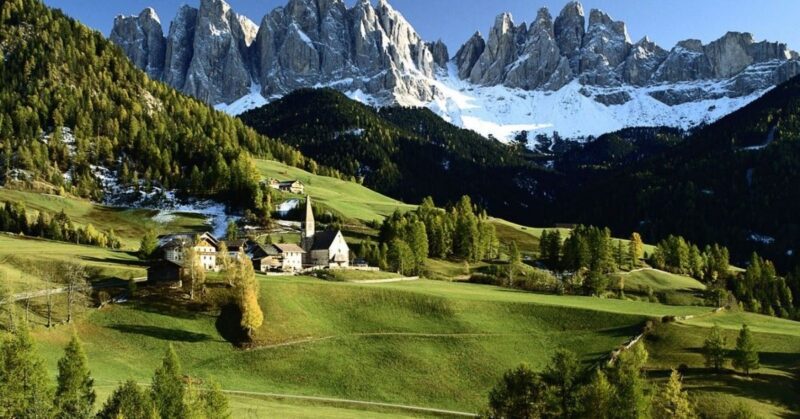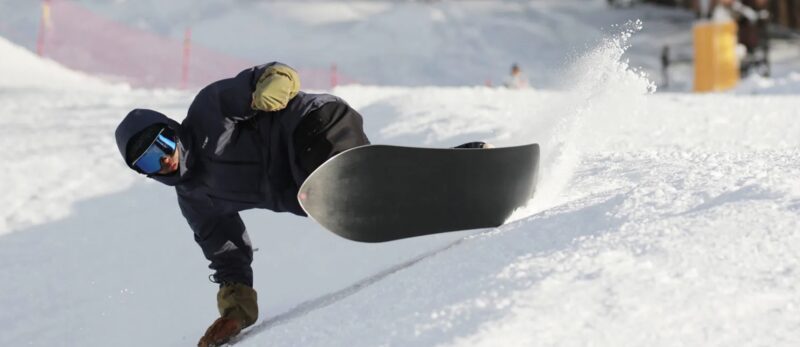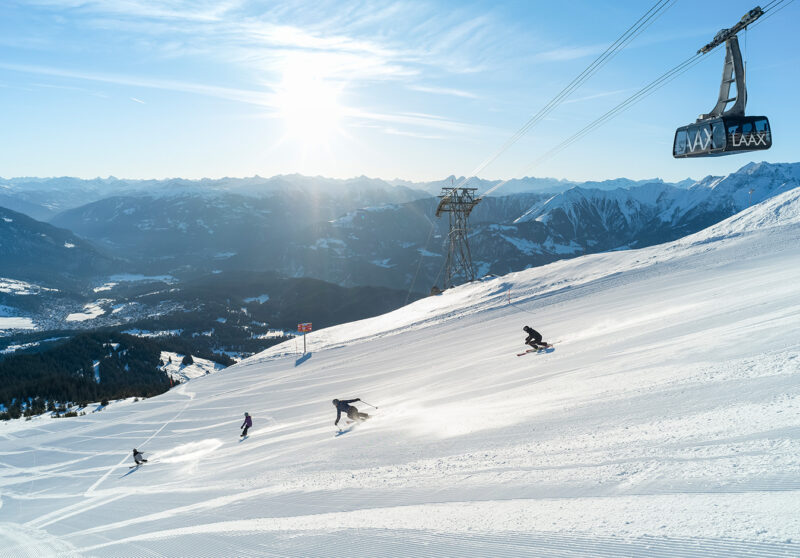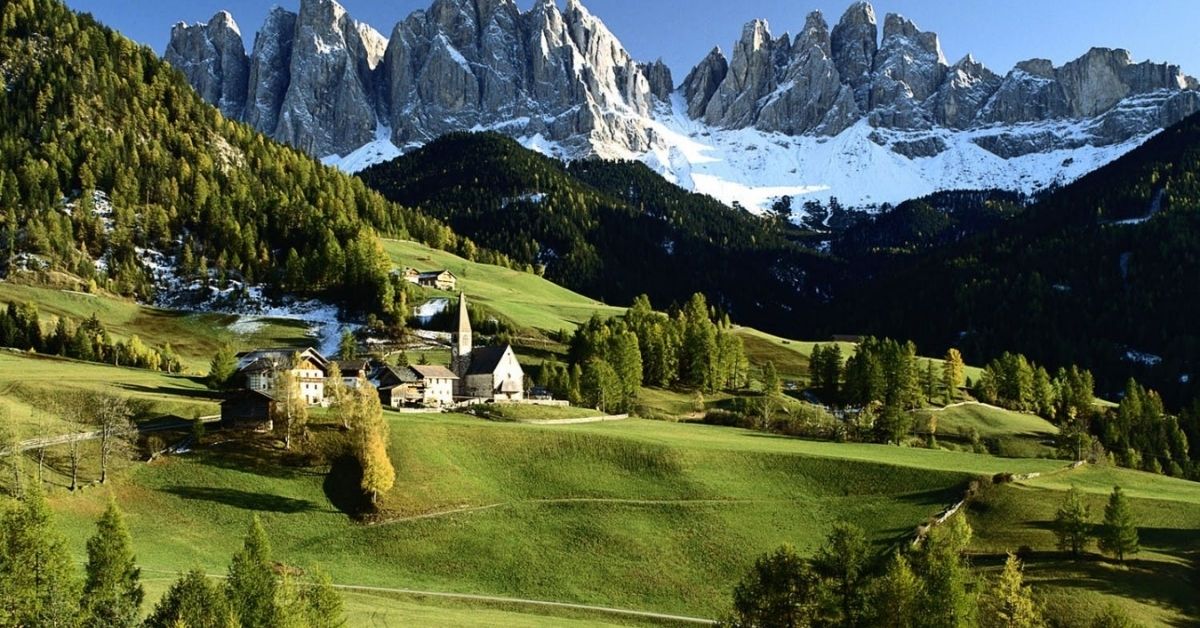
A week in the mountains does not have to mean spending every day on the slopes. After a few long sessions of skiing or snowboarding, taking one day off can be a welcome change, especially when the roads outside Bolzano lead through some of the most memorable scenery in northern Italy.
Bolzano is a useful base for a Dolomites road trip because several routes can be reached without changing hotels. With an early start, you can visit alpine lakes, cross high mountain passes and stop in villages such as Ortisei or Cortina d’Ampezzo before returning in the evening.
A morning departure from Bolzano
Aim to leave Bolzano at around 8:00 AM. Mountain roads take longer than their distance suggests, and photo stops can quickly stretch a six-hour route into a full day.
The drive begins through the Ega Valley, where the road runs between steep rock walls before climbing towards Lake Carezza. It is an easy first stop because the lake is close to the road and the walking path does not require hiking equipment.
In warmer months, Lake Carezza is known for its green water and reflections of the Latemar peaks. During winter, the lake may be frozen and covered with snow. The view is different from the familiar summer photographs, but the short lakeside walk is still worth taking.
Keep this stop fairly brief if you plan to continue as far as Cortina. Thirty minutes is usually enough to walk, take photographs and have a coffee before returning to the road.
Crossing Val di Fassa and Pordoi Pass
From Lake Carezza, the route crosses the Costalunga Pass and enters Val di Fassa. The road continues through Vigo di Fassa and Canazei, with ski areas appearing on both sides of the valley.
For skiers and snowboarders, this part of the journey is especially interesting. You begin to see how the resorts, lifts and valleys connect around the Sella massif. Places that appear separate on a piste map suddenly make sense from the road.
The climb to Pordoi Pass includes a series of tight hairpin bends before reaching an elevation of more than 2,200 metres. At the pass, you can stop for views of the surrounding peaks or take the cable car to Sass Pordoi when it is operating.
The cable car reaches a viewing terrace at approximately 2,950 metres. It can be an excellent addition on a clear day, but it should not be treated as essential. Clouds and strong winds can reduce visibility or interrupt operations, so check the official Sass Pordoi timetable before travelling.
If visibility is poor, spend a little time at the pass and continue with the road trip.
Choosing between Val Gardena and Cortina
After Pordoi Pass, the route can remain in the western Dolomites or continue towards the eastern mountains.
The shorter option crosses Sella Pass and enters Val Gardena. Ortisei is a good place for lunch and a walk through the pedestrian centre before returning to Bolzano. This version works well as a genuine rest day because it combines impressive roads with relatively little walking.
The longer route continues towards Cortina d’Ampezzo through the mountain passes around the Sella group. From Cortina, you can travel to Lake Misurina, where the Tre Cime di Lavaredo may be visible in clear weather. A complete itinerary may also include Lake Dobbiaco and Lake Braies before returning through Val Pusteria.
That full loop covers roughly 300 kilometres and can take around ten hours. It is possible in one day, but it leaves less time at each stop. During winter, when daylight is limited, visiting one or two lakes properly is better than rushing through all three.
When a local driver makes sense
Driving yourself gives you the freedom to stop whenever the light changes or a viewpoint catches your attention. For someone comfortable with alpine roads, that flexibility can be part of the experience.
There is a trade-off. The driver spends much of the day watching bends, traffic and road signs while everyone else looks at the mountains. Parking can also be frustrating around popular lakes and villages.
If nobody in your group wants to take responsibility for the road, joining one of the available Dolomites private tours from Bolzano is a practical alternative. Different routes focus on the western passes, the eastern lakes, Seceda or a longer combination of both sides of the region. A local driver can also adjust the route when traffic, weather or seasonal closures affect the original plan.
A guided trip does not guarantee perfect conditions, of course. Mountain weather still decides which passes and cable cars are accessible.
Do not treat it as a bad-weather backup
It is tempting to save a road trip for the snowiest day of a ski holiday. That can backfire.
The same storm that closes lifts may also make the mountain roads slower or less enjoyable. Heavy clouds can hide the peaks, while fresh snow may require chains or lead to temporary restrictions at higher passes.
Choose a reasonably clear day and check the South Tyrol mountain-pass information before leaving. Even during summer, temperatures can drop sharply at higher elevations.
Adding the Dolomites to a longer snow trip
Bolzano should be treated as a separate stop rather than a quick excursion from another Italian ski resort.
If your itinerary includes skiing or snowboarding in Livigno, consider spending a night or two in Bolzano before or after that part of the trip. This gives you enough time for an early departure without trying to connect two distant mountain regions in a single day.
Travellers joining a RideSide hosted experience should also check airport transfer times before adding Bolzano. An extra night provides useful breathing room if road or weather conditions change.
What to bring
You will not need ski or snowboard equipment unless you plan to ride during the journey. Bring warm walking shoes, a windproof jacket, gloves and an extra layer for the high passes.
Sunglasses and sunscreen are useful even in winter. It is also worth carrying water, a snack and a charged phone, particularly on the longer route to Cortina and the eastern lakes.
Is one day enough?
One day is enough to see several of the Dolomites’ best-known places, but the trip works best when you resist the urge to stop everywhere.
Choose the western circuit if you want a relaxed day with Lake Carezza, Pordoi Pass and Val Gardena. Choose the eastern route if Cortina and the alpine lakes are your priority. Attempt the complete loop only if you are comfortable spending much of the day on the road.
For skiers and snowboarders, the drive adds useful context. You see the valleys beneath the lifts, the roads connecting the resorts and the scale of the mountain range beyond any single ski area. It may be a day away from riding, but it rarely feels like a day away from the mountains.
More destination ideas and practical snow-travel advice are available in The Ride Side Journal.
Frequently asked questions
Can I visit the Dolomites in one day from Bolzano?
Yes. A western circuit takes around six hours, while a longer route through Cortina and the eastern lakes may take about ten hours.
What is the best route for first-time visitors?
The western route through Lake Carezza, Pordoi Pass and Val Gardena offers a good balance of scenery, stops and manageable driving time.
Is a road trip possible during winter?
Yes, although snow, visibility and temporary road restrictions may affect the route. Check current conditions before departure.
Is it better to drive or book a private tour?
Self-driving gives you more independence. A private tour is more comfortable if nobody in your group is confident on mountain roads or wants to spend the day driving.
Should I take the Sass Pordoi cable car?
Take it when the cable car is operating and summit visibility is clear. If the mountain is covered by cloud, use the time for another stop instead.